Monday, March 23, 2020

10 Design Fundamentals You Need to Know


Hi!


I haven't blogged in awhile. I'm looking to start back up. I say that every time I want to start blogging again. Time is hard to find, but since I'll be working from home for the foreseeable future, why not begin again?

Since the last time I blogged, I have moved to an eCoach / Innovative Learning Specialist role for Five Star Technology and am housed in the same district that I taught in. I get to help teachers create awesome learning experiences for students. It's so fun. I never know where or what I'll end up helping with each day.

Because of my background in design, I wanted to focus on some things that I can show to help teachers out that have now been forced to work everything online.
Here it goes:

Online Lesson Design

As teachers have shifted towards online / virtual / e / home / etc. learning, I thought I'd help out and share some tried-and-true design fundamentals to help with online lesson design. This is not an end-all-be-all type of list, but there are some small changes teachers can do to help learners learn.

Also, most people will probably call these Design Principles. I'm going to call them Design Fundamentals. They are like building blocks and you can get better at them.

Up front: My definition of designer.

You are a designer if you create anything. You don't have to have a fancy title to design things. You designed that turkey sandwich you're having for lunch today. You designed your hair today. You designed that route you took to school today. If you create something, you are a designer. You're creating learning experiences. You're a designer.

Yes, you're a designer. Now that you know that, let's dive into some design fundamentals.

Because I've really gotten into sketchnoting, I decided to sketch it out.


Disclaimer - If you are currently doing any of the things mentioned below, don't take it personal. I used to struggle with some of them. I still do with some. I don't necessarily follow them to a "T." There are no definites. I'm just trying to help you be more aware of these. Jake Miller quotes this Maya Angelou quote all the time and it applies here: "Do the best you can until you know better. Then when you know better, do better."


Good Visual Communication


You've just been kicked out of your classroom for the next who knows how many months, you've got to transition to doing everything online. Your lesson plans. Your assessments. The way you deliver your content. The way you interact with students, parents, etc. You are stuck. You don't know where to begin.

There are 10 fundamentals of design that I'm going to focus on for this. In reality, they can all be boiled down to "Good Visual Communication." As you read through these 10 items, see if there are things that you can start implementing now to help communicate with your students better. I say your students, but what I really mean is people in general. These are good for any means of communication.

Think of it this way: People don't notice good design. It just flows. It's easy. People's brains don't have to work hard to figure it out. Have you ever been in an unfamiliar heavily crowded place? An airport in a foreign country? A sporting event? A subway? An unfamiliar city? How much did you rely on way-finding signs? Were they easy to find? Could you understand them? You probably only remember the frustration of not being able to understand what the signs meant. If you don't remember, whoever designed them did a good job.


Good design goes unnoticed because it breaks down barriers and makes things easy to understand. It's almost like it doesn't exist. It just is.

If you want to learn some design fundamentals that can help you communicate more effectively, then continue to read on.

1. Fonts (aka typefaces, but we'll stick with fonts for this)

Listen. I know there are people out there that like curly-q fonts and all that. But if your font is hard to read, you're not communicating effectively. That's what it's all about. Communicating effectively.

I could talk about font selection for days. Teachers don't have time for that. Generally, there are a couple of font rules that are recommended.


Rule 1: Stick to 2 fonts. Max.


  • A bold sans-serif one for headings and titles.
  • A legible serif font for the body.
  • If you prefer this rule, choose a good pair.

Rule 1a: or stick to a font family


Rule 2: Stay away from anything that isn't legible by the elderly.


For real. Great-Grandma Susie that helps little Timmy with his reading doesn't have time to decipher your instructions. She needs it to be communicated very easily. If you think it's cute, has twelve curly-qs off each letter, looks like it's bleeding, or is too close together where the letters run into each other, just don't do it. Keep it super simple.

Side-note: those font types I just mentioned do have a use in this world, but probably not for instructions on classwork. If you use them, use them on short, quick header type things. Definitely don't use hard to read fonts on the larger body-type paragraphs.

Resources:

Most of what teachers use need to be web based fonts like -
If you have a desktop and can download fonts. Check out -
Have students that struggle with Dyslexia? They have some fonts that help with that.

Dyslexia Font - also take the time to scroll down to the bottom to check out some other helpful information about fonts. Remember, if it’s good for some, it's probably good for all.

My favorite Google Fonts

2. Colors

Colors: keep it simple. Use a palette. Only use color when absolutely necessary. Design everything first, then add colors at the end. 


3. White Space

White space is the space around an item. Usually it's white. That's why it's called white space.


This space includes -


  • the space around an image.
  • the space between lines of text (technically called leading)
  • the space between letters (technically called kerning between two letters and tracking for a larger body of text)
  • the space from the edge of a paper or web page
  • the space between columns of text
  • the space between well, anything

Too close together and it muddies up everything. Too far away and things look like they've hit ludicrous speed and are darting off into space.


All you need to do is make sure there is adequate distance between items or the edge of the page/site. It will help you communicate better.
Resources:


4. Grids / Tables


Grids and Tables go along with white space.

Say you've got a white space problem?

Are things looking like an overloaded menu from a local eatery or like an aerial shot of bumper cars? Does it look like someone ate text and graphics and then vomited them up on your paper in a random assortment?

Grids and tables are here to the rescue.

Using grids/tables in your designing helps keep everything aligned into a logical flow. It helps the eyes move from one thing to another. A good grid/table makes reading it intuitive.


  • Google Sites: comes with a built-in grid.
  • Google Docs: add a table
  • Google Slides : Use the layouts
  • Adobe Spark Sites : Use the layouts they have provided.

Don't leave it to chance. Help yourself communicate better by creating a grid or table while designing.


5. Icons

Icons are basically just fairly simple images that help convey meaning and help the reader understand a little bit better. Emojis would fall under this category. If you are a teacher of K-2, I would use a visual (accompanied with text) for everything. They might not be able to read yet, but they sure can understand a picture. Honestly, using icons for everything is a good practice whether your teachers K-2 or higher ed. It helps people understand tone and quickly identify where they need to be. Remember above when we talked about being lost in an airport? I imagine you found your way using only icons.


Resources


6. User Experience


User Experience has gained a lot of traction with web designers. It's basically designing through the lens of the user. In web design, a designer will make a website. They'll ask people to test it out. Those people will give feedback on how to make it a better experience. There are a lot of bells and whistles that go into it. We can simplify it in the education world as learner experience.

The essential question here is: Does it make sense to the user/learner/viewer?

In all reality, and I don't mean to be blunt, but okay, it's going to be blunt. Who cares if the designer (this is you) knows what you're trying to get across? It's not really about you. It's about the user. The learner. Can they understand, with minimum energy being spent, what they are to do? If they can't and they are always asking you, "How do I do this?" or, "What do I do next?" then you haven't communicated it very well. You've created a bad user experience.

The idea is to really be set on a growth mindset of continual improvement. How often are you asking for feedback from your students? How often are you asking for feedback from your parents? Do you have a colleague peer review anything? How often do you try and imitate what a student would do with your instructions while sitting at a computer or tablet? (Please don't really be them and wipe your boogers on it.)

This is a good time to review the good ole follow instructions directly for making a peanut butter and jelly sandwich. Hopefully, your students don't feel like the dad in these videos.

Starting with empathy is a good way to begin. Put your student "glasses" on. Or "walk a mile in their shoes." What would they notice? What would they click on first? Are things clear? Does it flow well? Are they having to open up a bunch of tabs and switch back and forth? Do you get lost reading your own instructions? Are the colors messing with your eyes? Do the graphics go along with the text? Are things logically put together? Do links work? Do they take the learner to what they think should be next?


Resources: 


7. Less is More


I'll summarize this section by using bullets.
  • Use Bullets
  • Use the Rule of 3 - try this for everything. It will change you.
  • No large paragraphs
  • Keep It Super Simple
  • Break it up into chunks
  • Break it up into separate pages or assignments
  • Have checkups along the way
  • Small short focuses


8. Focus

This goes along with Less is More, but it's more than that. A lot of times, I see things together, that shouldn't be together. Before you go and design anything, possibly sketch out what you're trying to get to. Cut the fat on things that don't need to be there. Keep the main thing the main thing. Separate assignments into two if needed. Keep in mind that you might not be right next to them to answer questions. If something doesn't jive with your teaching philosophy, cut the fat. If it's "busy work," cut the fat. Keep things focused.


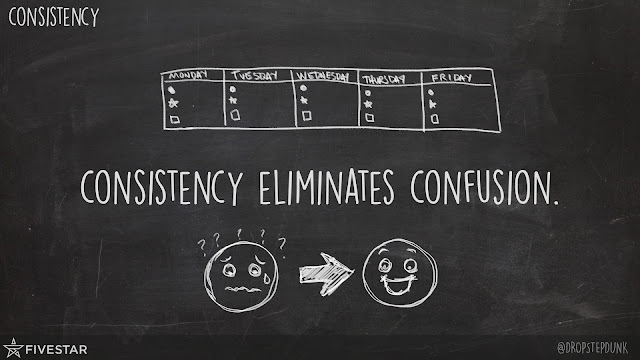
9. Consistency

If what you deliver to your students on Monday looks totally different than Friday, you've lost your audience. Keeping things the same helps with the flow. People are creatures of habit. If students know to click this specific thing to start every time, then they just do it. You don't have to tell them. You should be consistent in your colors, your fonts, your icons you use for specific things, where your instructions for each assignment is located, etc. Don't make people waste energy trying to find where things are.

Staying consistent helps eliminate the unknowns, which makes your communication so much faster and easier on the user.


*Yes you can still switch things up. Sometimes things need to be changed and updated. Just don't do it too often.


10. Flow


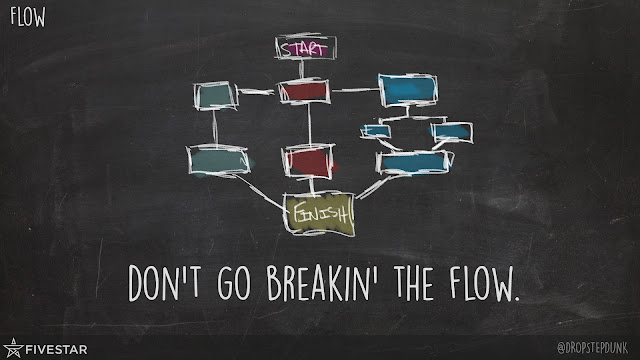
If I had to pick two of the ten to focus on, it would be User Experience (because everything can be driven from there) and Flow.


You want your learners to get into a flow.

You don't want to break the flow. One little thing out of whack can derail a very detailed thought process.

How are you making it easy to get into a flow? Are you using some sort of module where students go to the next assignment level? Do you have it posted at the end of the assignment what to do next? Where do they submit? Is this the end? How many steps are needed? What step are they on? Do they stay within the LMS? Do they have to open a lot of tabs?


Recap

While this is geared toward educators, it most certainly can be used anywhere.

You are a designer.

You need to communicate in a way that helps learners understand easily.

Use some of the above to enhance your communication.

Your learners will learn more effectively.


Share this with your friends.

Add a comment below if you found this valuable, if you have a question, or if you have any ideas for my next post since I just picked back up blogging.
Share:

Monday, October 2, 2017

Quick: Join the Innovative Teaching Academy


Dear FutureMe,1. I joined to push myself. To connect with others. 2. To network and get ideas and share ideas. To learn more PBL. 3. Time will hold me back. 4. In 6 months, be more comfortable in the classroom. Make transition to PBL? Update lesson plans.

6 Months is Up. My time in the Innovative Teaching Academy has been phenomenal. I got the above email in my inbox the other day from FutureMe.org. I filled it out at the beginning of the course on what I wanted to accomplish when my time in the Academy was over. Looking back, I can definitely say that it was totally worth it. I had been in a rut. I needed more. I wanted to SAIL this coming year and I was determined to do so. 

Through AJ Juliani's and all the guests' guidance and coaching, the topics really pushed me, not only as a teacher, but as an individual as well. I learned a ton and really feel that everyone will benefit from joining the class. I've always thought that professional development should be tailored individually and this course was definitely for me. The thing is, I think it's tailored for everyone, as well. You will get out what you put in. The bonuses and add-ons are worth the price of the course by itself, in my opinion. 

I have been to one-day and two-day conferences that have cost the same or more than this 6 month course. It also has the benefit of networking with other members of the class to share the experience and learn from them, as well. 

I suggest signing up before the window closes on October 8th. That's in 6 Days!!


Here's some more information from A.J....


A year ago at this time I had the idea for a different type of learning experience after listening to Seth Godin talk about his AltMBA program. Seth said that people spend hundreds of thousands of dollars and years of their life at graduate school receiving an MBA. Then they get into the world and realize they need to continually be learning, and need a network that supports and shares both the best (and the next) practices in their field.
I had a conversation with my colleagues in my district and around the country about a new way to do professional learning for teachers, instructional coaches, and leaders. One that would take way less time (only 6 months), cost way less money, and provide ongoing support and guidance for a much longer time. These conversations led to creating the Innovative Teaching Academy and bring on our first cohort of 612 teachers, coaches, and leaders last March.
You see, I struggled for years to start a blog. I would have a new idea, start posting blog posts, and never get anywhere, before giving up. Then I found a community of bloggers that held each other accountable, and things dramatically changed.

I spent so much time looking for strategies and projects that would engage and empower my students. Until I found research backed practices that made innovation a reality in my classroom.
I made so mistakes as a leader (and still do) but have been supported by other experts in different areas who spend the time I don't have to show us what works (and what doesn't) in schools...instead of talking in theory.
This is why I felt so strongly about creating the Innovative Teaching Academy. I've learned first hand that you need specific resources, people, systems, and community to make spark innovation in any classroom or school.
The Innovative Teaching Academy is a six-month online learning experience that gives you the tools, resources, and community needed to break the mold of traditional schooling (whether as a teacher, instructional coach, or school leader).
The Innovative Teaching Academy isn’t just a course. It’s a master class and coaching system designed to take you through step-by-step lessons and teach you the principles and strategies needed to make a greater impact in education and reach more people.

And to provide the accountability and support system we all need to thrive.
  • Easy-to-follow lessons? YES
  • Monthly courses on design thinking, project-based learning, learning space design, habit building for productivity, social media, and blogging? YES
  • Supportive community of education leaders? YES
  • Built-in accountability? YES
  • Unlimited personal coaching with the Academy Team? YES
The academy is grounded in proven principles and strategies that work. It’s broken down into simple, step-by-step lessons that allow you to walk through each of the six phases of innovative teaching and learning.

Each lesson will leave you with an easy-to-follow action item and schedule so you can methodically implement what you’ve learned
No guesswork.
No reverse engineering.
No more hours or searching the internet for something that makes sense.
Come check it out here.

What is inside the Innovative Teaching Academy?

Each Month of the Academy has a different focus. At the beginning of the month you’ll receive a full course on topics such as Building a Better Blog, Social Media with Purpose, Design Thinking, Learning Space Design, Project-Based Learning, and Authentic Work.

Each week you’ll also receive a new article, video, and resource to prompt discussion in our private group and also help you complete the action items for the month.

You’ll also get access to live interviews with experts and leaders in each field, being able to ask them your questions and dive deep into each area with their guidance.
During all of this, you’ll have access to our Private Facebook Community and online coaching for support, guidance, and the community we all need to thrive!

The Innovative Teaching Academy Isn’t
For Everyone

Do not join the academy if you are looking for a quick-fix to innovation and creativity in the classroom.

This course takes work.

If you’re just hunting around for another blog post or podcast episode where you can pick up a random strategy to “try out,” you will HATE this experience.

But if you’re sick and tired of not being able to turn your ideas into real innovative change, and you’re ready to follow a proven system to fix that, you’ll love it.
If you’ve always wanted time-tested courses, an accountability system, a coach and a supportive community to walk with you as you grow, you’ll love the Innovative Teaching Academy.

It is exactly what I wish I had much earlier in my education career. That's why we built this academy and are excited to share it with you!

The Academy is open for enrollment from September 28-October 8th only. Let's do this together!
Thanks as always,
AJ


Share:

Thursday, August 3, 2017

2017-2018 One Word: SAIL

Every year, I choose One Word to be my driving force. Some make resolutions, some choose three things. I typically choose one that can encompass a lot. It's me trying to make things more simpler.


Here are some from the previous years. 

 Pursue things that matter. 
 Be present in each moment. 
Be joyful.
 Shift my thinking. 

Building off of the previous years, I'd like to take what I have learned these past couple of years and SAIL. 


The Word: Sail

The Quote: "A ship is safe in harbor, but that's not what ships are for." John A. Shedd

The Verse: "Or take ships as an example. Although they are so large and are driven by strong winds, they are steered by a very small rudder wherever the pilot wants to go." James 3:4

The Logo: It's a boat made out of the letters in Sail. S for the bottom. A is a sail. I is a pole. L is another sail.

The Meaning at School: Over the past couple of years, I've really been able to change the way that I taught. I've placed more emphasis on creating and innovating and less on content. I've been blessed with a position that lets me do this. While reading and diving deeper into how students learn today and presumably in the future, those that merely know content are going to be left behind. No more is the go to college, get a great job, have a great pension, retire with a lot of money the norm. There are young entrepreneurs making a lot more money than I am. I was listening to Tim Elmore on the EntreLeadership podcast the other day and he always blows me away with insight into the young generations and how they learn, communicate, and are successful. It's time I embraced more of that mindset in my teaching. I'm going to do a little more PBL this year. I read Hacking PBL over the summer to get a better idea of PBL.  Ross Cooper and Erin Murphy do a great job of breaking it down into 10 hacks to help you on your journey. I do some already, but I'd like to incorporate more of that into my current things. I want my students to sail. I have always thought that it's interesting that a very small rudder can steer a huge ship. (I've also watched Moana a ton this summer. So that may have influenced the word Sail.) I'm just a mere rudder. A catalyst. Showing the way. Aligning my students to the path. Take risks. Go deeper. Innovate. Create. Do stuff that really matters.

The Meaning at Home: The OneWord is geared to encompass all your walks of life. SAIL will be used in the same format in my personal life. I need to sail in my marriage, with my own kids, and in learning personally.

The Meaning while Coaching. I'm already looking at ways to help my basketball team come this winter. How can I tailor my system to meet the needs of my players for this year? How can I mold leaders? How can I help my team SAIL?

The Meaning while Designing: This past year, I started working doing a lot of sports graphics in Photoshop. I'd like to continue that. I come alive with that. I'd also like to combine my sports photography and design work a little more this year as well.

We can get by and play it safe while just being mediocre, or I can choose to SAIL and make a huge impact on others.


Share:

Friday, July 14, 2017

Examples of Empowerment

My friend, A.J. Juliani, with the help of other educators, has published a great blog post detailing many examples of empowering students. I'm pretty sure that everyone can find one important piece that will help them become a better teacher.


I contributed one of my favorite Renaissance lessons to the list as well if you want to check it out.

Sharing and helping equals learning. I learn the most by seeing the process of what others have went through. I then take things that I think are relevant to my class, subject, and students and then put them in place into my teaching. I really enjoy tweaking and making lessons better to meet the needs of my students. I have found that the teacher community is one of great sharing and A.J.'s post about the examples is something that can help many teachers (and students) in the classroom.

I can remember early on in my teaching career, that I made teaching more about me. Not as someone who needs a pedestal, but as more of the work side of things. I had to do this. I had to do that. I had to prepare this. I. I. I. I. I. I. I. I. That's a lot of eyes on me. :) I thought it was more about what I was doing and not what students were doing. Over the years, I have seen the value of empowering students. I now offer more choice. A lot of the time, I'll put this phrase into a project: "Do you have any better ideas for this ______?" My favorite thing to do is then share their idea of amazingness with the class. Usually when that happens, another student will have a better idea that stems from it. It's a nice little spark of creativity.

Be sure to check out A.J.'s post and then check out A.J's and John Spencer's new book, Empower: What Happens When Students Own Their Learning.


Share:

Friday, June 16, 2017

Cut the Fat. Be more Simple.

Go! Go! Go! That's what it always seems like around here. For all the awesome things we're doing, it always feel like too much.  My family's just as busy as everyone else's I'm sure. Over the past couple of years, I have decided to simplify a lot of things. Not because it's easier. But for the fact that less is indeed, more. Less time on some things, leads to more time on things that really matter. 


Watch this intro video to Rend Collective's album entitled Campfire II. If you're not familiar with Rend Collective, I suggest you give them a listen. I added the whole playlist, so you can listen if you'd like. I've found that it's really good background music. It keeps me energized and it's almost impossible to not tap your foot. You can't go wrong with banjo music. 


Whether you believe in the same religion as this band is non-important. What they are championing is a return to what really matters. To fellowship. To community. To connections. 

Some thoughts from the intro video.


"Simplicity is the art of restoring a clear and unobstructed view of the things that really matter. Unplugging ourselves...Our lives are so full, distracted and stretched. Learn to clear away the clutter and detox our hearts." 

We've got to realize that we are crazy busy. We need a return to simplicity. We, as people, are busier than ever. We're also filling our spiritual voids with busy-ness. We have to come to terms with this notion. 


"Authenticity is not a style. It's a state of the heart. It's about substance."

We have to be intentional about simplicity. I had to learn to say, "No." to some things. I've turned down some pretty good things and opportunities. But what would I have gained? I'm not sure. I said, "No." to basically say, "Yes." to something better. In most instances, time with my family. Being authentic is saying, "No." and not feeling guilty. Say, "Yes" to what really matters. I've spent a lot more time with my family over the past couple of years. I've hugged more. I've still got a long way to go, of course, but I try to make it a point.

In the realm of the classroom, we can do way too much. We can over teach. Over prepare. Over plan. Over (insert anything here). We're teachers. We know we answered a calling to help and serve others. However, we can't help and serve if we're not taking care of ourselves first. That brings to mind an airplane flight attendant.  In the advent of an emergency, they always tell you to put your mask on first before assisting others. Why? Because you can't help others, if you don't help yourself first.

Maybe this means, doing less grading and giving more feedback. Plan for student inquiry instead of you being the "sage on the stage" all the time. Only grade meaningful things vs practice assignments. Come to school one hour early instead of leaving one hour after school. Really use your prep time to complete tasks. (That's something I struggle with big time by the way.) I've developed a really good format for what is important to my classroom. I try to keep on those things. It centers on consuming to create and innovate. If it doesn't align with those things, then why am I having my students do it. Cut the fat. Be more simple.  Almost every day I do these things: Pun of the day, quote of the day, read to my students, consume, and then create. That's it. Be clear. Be concise. Be simple.

Focus on three things. Read this about how to be more productive. Choose one word to represent your entire year or better yet, your entire life.  After almost 15 years of coaching basketball, I haven't gotten more complex. I've went the other way. I keep things extremely simple. The more you have to think, the slower your feet get. I find pleasure in keeping things as simple as possible. My teams build off of things I teach early on in the season. My communication has sharpened because of trying to think of the end first. You have to know where you're going.

Make meaningful experiences instead of have them complete a checklist. Some might gasp as this next one. My favorite days of teaching are when I have planned a great project, where the students are deeply engaged and they really don't need me besides for clarification. I can sit around the room and just chill with my students. This is when I really get to know them. To swap stories. To share my life and for them to share theirs with each other. Which leads us into...


"Share our real selves and our stories. Our deepest fears yield our deepest connections. That is how true communities are forged. Our testimonies, no matter how dark, are powerful weapons of light."


Over the past couple of years, I have really started to put an emphasis of relationships. You know, because that's what really matters ;) I've reached out to some people and we meet regularly. We use voxer. We meet at the local diner. We share life together. Every year one of the last things I have my students do is to write their favorite memory of my class. I'd say 95% of the time, it involves at least one other person and something funny. No one says things like the Rome test, the feudal pyramid, or latitude and longitude. Why? Because none of that stuff really matters. What matters and is the most memorable is the connection they made with others. The friendships. What are you doing to share your story with someone else? Better yet, whose stories are you listening to? Find a trust-worthy friend.


"Calling us to risk and danger, so we might change the world... Our God loves us too deeply to smother us with safety. He knows we don't combat our fears by living sheltered lives we fight fear by developing courage."


I remember a couple years ago, I joined into a Voxer group of some pretty awesome guys. They run in some pretty big circles. I run in such small circles that they are more like little dots. I was nervous. When I say nervous. I mean I didn't say anything. At all. I just listened. I eventually said stuff. I eventually had dinner with a lot of them. I worked on some projects with them. One of which was way out of my comfort zone. I have designed logos for some of them for their awesome projects. (Here's my design portfolio) I shared my life. I listen to their stories. I now consider some of them my best friends and mainly because I talk to them the most besides my family.

Courage takes time. The only way to be brave, is to well, be brave. My son, who just turned 5, has had a really big fear of heights. When I say fear, it is a legit fear. I mean terrified. Over about a year, he has developed confidence in himself to tackle playground equipment. It's taken time. He's taken baby steps. Literally. Lol. But he has gotten to places high up off the ground this summer that were not possible last year.

In the classroom, what are you waiting for? Try that new thing. Never tried Genius Hour? Do it. Thinking about a shift to Project Based Learning? Do it. Try it for one unit or lesson. Get out there. Dance in the street. Watch out for cars, of course! Seriously. Ships weren't meant to stay in the harbor. They were meant to sail. No one ever changed the world sitting in their living room twiddling their thumbs. Being safe is okay. But okay is just, okay. Don't be okay. Be great.


"No longer want to be half-alive."


This goes along with the last quote. A couple years ago, I felt like I was in a funk. I needed more. I was so engaged with school, that I was missing out on other things. Those things were the things that really matter. Marjorie Pay Hinckley says is pretty well, “I don't want to drive up to the pearly gates in a shiny sports car, wearing beautifully, tailored clothes, my hair expertly coiffed, and with long, perfectly manicured fingernails. I want to drive up in a station wagon that has mud on the wheels from taking kids to scout camp. I want to be there with a smudge of peanut butter on my shirt from making sandwiches for a sick neighbors children. I want to be there with a little dirt under my fingernails from helping to weed someone's garden. I want to be there with children's sticky kisses on my cheeks and the tears of a friend on my shoulder. I want the Lord to know I was really here and that I really lived.”


"Mission is the ignition."


You have to make a decision to live with simplicity. To focus on what matters. To give up things that are meaningless. What is your mission? If it's getting your kids "As" that's not a mission statement, that's an endpoint. When students leave your classroom, are they just going to remember a letter on a report card? I hope it's more. I hope it's way more. Your mission has to transcend today.

For some more ideas on this topic -

Minimalism Documentary - I watched it on Netflix. We have too much stuff.
The Kindness Diaries - a man travels around the world based on the generosity of others. Thanks to Dean Shareski, who is always full of joy and really gets life, for the tip on this one.
Happy - I watched on Netflix.
Platon : From the Abstract Series on Netflix. I love the opening about how he can tell a story through the picture.
Tales By Light Series on Netflix - Himalayas and Life and Death are really good on culture
72 Ideas to Simplify Your Life


Share:

Friday, May 26, 2017

Learning is a Conversation #ITA17

I'm currently in the Innovative Teaching Academy ran by AJ Juliani. This is a blog post in relation to the class. Sidenote: AJ and John Spencer are getting ready to release a new book titled: Empower. I'm super pumped for it. 
Has technology made us learn new things in new ways, or are we just learning the same old things in new ways?
When answering this question above, I can't help but think that learning doesn't happen in a vacuum. It used to be, but things have changed. Learning is a culture in itself. We have to think of the culture of learning that extends far beyond how technology has helped us learn. 
Being a social studies teacher, I tend to think in terms of cultures: the ebb and flow of life and how things interact with others. Learning has now changed beyond the school walls. 
When getting students to learn today, teachers have to look beyond the walls and think about where this learning might take them. We have to think of the audience. Large audience? Small audience? Does it need to stay within the classroom? Are we learning to create for a global audience? 
Wait. Global audience? That didn't use to be an option. 
Everything stayed within the four walls of the classroom. Students created for the teacher. Sometimes, they might have created for other students. This is where technology has changed everything. 
In regards to learning, we used to learn by reading. Now we're learning from videos, blogs, websites, online classes, MOOCs, PLB, YouTube channels, Twitter, Voxer, Google Hangouts, Skype, YouTube Live, Facebook groups or Facebook Live, and on and on. You can now pick the brain of an expert "in person." We have so many avenues of obtaining information. 
Learning is now a conversation. 
Where I think technology has changed learning is that learning can now be a conversation and not not just a "read and get" one-way conversation. It's interactive. It let's the learner dive deeper than just a textbook. 
I mentioned that I think learning is an element of culture. I'd argue that classroom cultures shift from classroom to classroom. Schools even have their own culture. Each team, whether it be a teacher team, a sports team, a business team, or whatever has a separate culture about it. The leader of that environment has to embrace what learning is today. You can't limit yourself, or others under your leadership, to what has always been. You have to embrace it. Maybe that leader is a teacher. Maybe it's "Mary, the Mom" who is trying to plant cucumbers and has sought the help of a master gardener through Google Hangouts. Maybe it's a boy that has a love of dinosaurs and his parents have found documentaries on Netflix/YouTube to watch and obtain information. Maybe it's me, the "Un-Handy Man," that calls on YouTube, watches a video, reads through all the comments, and double checks links and resources for validity in order to help myself replace the flapper in my toilet. I then went to the hardware store, engaged in personal and professional dialogue about what I needed, the specifics of my toilet and unique problem, and then we were able to find what I needed. 


Share:

Wednesday, April 26, 2017

The Simplest Definition of Innovation in Schools


I'm currently in the Innovative Teaching Academy. It's a class put on by my friend, AJ Juliani. I'm so grateful for the opportunity to be a part of this great class and learn from so many awesome people. 

"What is innovation?" is the topic of the week. We had to answer that question by creating a meme. (Sidenote - George Couros' book, "The Innovator's Mindset" is a fantastic read on the topic. It affirmed many of my beliefs about what being an innovator truly is. I suggest you give it a read.)

This is my meme. 


I imagine someone a lot smarter than I did came up with some grand definition of what innovation in schools really is. Problem is, I probably couldn't understand it because there would be big words. So, how about we keep it really easy. 

The quick answer to this is that if students are truly engaged, it's probably innovative. If students don't want to leave your room to go to the restroom, it's innovative. They'll hold it. They'll do the pee-pee dance while working. Their eyes will start to have a yellow tint. They'll do whatever it takes to stay in the room. My best lessons are like this. I can see it happening. There is a certain energy during this type of learning. I also have a ton of dud lessons. Hopefully, I can eventually make all of them innovative. It takes time. 

The simplest definition of what innovation is in schools is if your students are doing the pee-pee dance while creating then it must be innovation. 

It takes courage, a huge amount of bravery, a willingness to leave your comfort zone, and to ultimately let go of the fear of failing. I had to get over myself for real innovation to take place. I had to release control, release the "I'm the most important person in the room" mode, and release the "Learning Isn't About the Teachers" role. Get over yourself. 

I remember the first time that I tried Genius Hour / Passion Projects four years ago. I had no idea what I was really doing. I pitched it as a do anything you want and just show us what you learned by creating something that you present. Pretty sure no one left to use the bathroom that day. 

Trust. I had administrators that ok'd my adventure. They trusted that I knew what I was doing and knew it was what was best for kids. They were also there to check-in and bounce ideas off of. 

Just do it. Yes, that's Nike's slogan, but for crying out loud, do something. 

Get out there and do something. Push yourself. Put yourself in your learners' shoes. Would they really want to be in your class if you said it was optional? 


Share: